Have you ever received a text, email, or phone call that seemed legitimate, but something felt off?
You're not alone. According to a 2025 Bankrate survey, more than two-thirds of Americans (68%) have experienced a financial scam or fraud at some point in their lives, and one in three encountered one in the past year alone. Fraudsters use trusted company names, realistic websites, familiar logos, and urgent messages to catch good people off guard.
The impact is significant. According to the FBI's 2025 Internet Crime Report, cyber-enabled crimes defrauded Americans of nearly $21 billion, with cryptocurrency and artificial intelligence-related scams among the costliest.
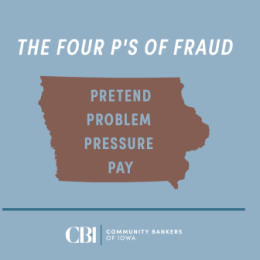
The good news is most scams share common warning signs. Once you know what to look for, you'll be better equipped to recognize fraud before it succeeds. A simple way to remember those warning signs is the Four P's of Fraud.
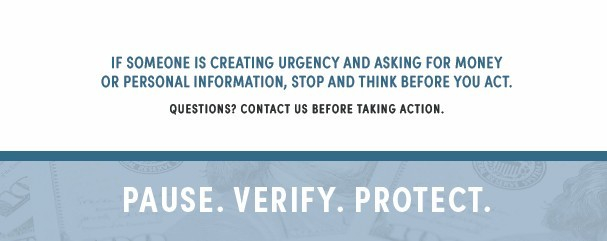
If you're unsure, stop the conversation and contact the organization directly using a trusted phone number or website.
Ask yourself: Is this problem real, or is someone trying to make me panic?
Legitimate organizations typically provide ways to verify information rather than demanding immediate action.
A legitimate business, government agency, or financial institution will allow you time to verify information and make informed decisions.
Ask yourself: Is this request unusual, unexpected, or difficult to verify?
When in doubt, contact your bank before taking any action.
The important thing isn't feeling embarrassed if you're targeted. It's knowing how to respond.
This information is provided for informational purposes only by the Community Bankers of Iowa and Iowa State Bank.
You're not alone. According to a 2025 Bankrate survey, more than two-thirds of Americans (68%) have experienced a financial scam or fraud at some point in their lives, and one in three encountered one in the past year alone. Fraudsters use trusted company names, realistic websites, familiar logos, and urgent messages to catch good people off guard.
The impact is significant. According to the FBI's 2025 Internet Crime Report, cyber-enabled crimes defrauded Americans of nearly $21 billion, with cryptocurrency and artificial intelligence-related scams among the costliest.
The good news is most scams share common warning signs. Once you know what to look for, you'll be better equipped to recognize fraud before it succeeds. A simple way to remember those warning signs is the Four P's of Fraud.
1. Pretend
Fraudsters often pretend to be someone you know or trust. They may claim to be:- Your bank
- A government agency
- A utility company
- A technology company
- A family member or friend
If you're unsure, stop the conversation and contact the organization directly using a trusted phone number or website.
2. Problem
Next, scammers create a problem. They may tell you:- Your account has been compromised.
- Your Social Security number has been suspended.
- You owe money immediately.
- A package can't be delivered.
- Your computer has a virus.
Ask yourself: Is this problem real, or is someone trying to make me panic?
Legitimate organizations typically provide ways to verify information rather than demanding immediate action.
3. Pressure
Scammers don't want you to stop and think. That's why they often create a sense of urgency by saying things like:- "Act now."
- "Don't hang up."
- "This offer expires today."
- "Don't tell anyone."
- "Your account will be closed immediately."
A legitimate business, government agency, or financial institution will allow you time to verify information and make informed decisions.
4. Pay
Eventually, the scam usually leads to a request for money or sensitive information. Common requests include:- Wire transfers
- Gift cards
- Cryptocurrency payments
- Online banking credentials
- Security verification codes
Ask yourself: Is this request unusual, unexpected, or difficult to verify?
When in doubt, contact your bank before taking any action.
Essential Steps to Protect Yourself
While scams continue to evolve, a few simple habits can significantly reduce your risk:- Never share online banking passwords or one-time security codes.
- Verify unexpected requests through a trusted source.
- Enable account alerts when available.
- Review account activity regularly.
- Use strong, unique passwords.
- Avoid clicking links in unsolicited emails and text messages.
- Keep your devices and software up to date.
What to Do If You Think You've Been Targeted
If you believe you've encountered a scam, act quickly:- Stop communicating with the suspected scammer.
- Do not click links or download attachments.
- Do not send money or provide personal information.
- Contact your community bank immediately.
- Change passwords if you believe your accounts may have been compromised.
- Monitor your accounts for unusual activity.
- Report the incident to the appropriate authorities.
Fraud Can Happen to Anyone
Fraud doesn't discriminate based on age, education, or financial experience. Even the most cautious individuals can encounter a scam that appears convincing, especially as fraudsters use new technologies like artificial intelligence to make messages, phone calls, and websites look increasingly legitimate.The important thing isn't feeling embarrassed if you're targeted. It's knowing how to respond.
This information is provided for informational purposes only by the Community Bankers of Iowa and Iowa State Bank.
Business Fraud Business Tips Community Consumer Tips Cybersecurity Fraud Prevention General
September 16, 2026 by Iowa State Bank