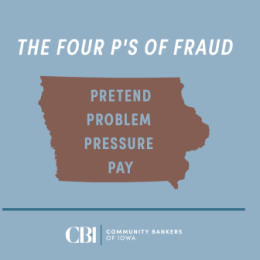


Scammers know how powerful and realistic artificial intelligence (AI) has become – and they’re using it to their advantage. Everyone is susceptible to fraud, but older adults have become a popular target. It is estimated that seniors in the U.S. lose $2.9 billion each year to financial exploitation and scams. Scammers are using AI to make their schemes even more convincing, so knowing the warning signs is vital.
Protect older adults by learning the following common types of elder fraud and how scammers are using AI to exploit:
Romance scams – Fraudsters use AI to create highly-realistic fake profile photos and create deepfake videos to deliberately convince an elder to trust them. Over time, the scammer builds trust with the older adult and may eventually ask for money with fake emergencies and travel costs. It’s important to maintain open communication with the older adults in your life, and to pay attention to any new love interests.
Grandparent scams – These scams are particularly malicious because fraudsters use AI to replicate the voice of a family member using clips pulled from social media and online videos. The scammer often poses as a child or grandchild and claims to be in immediate financial need. Establish a family “code word” to verify emergencies. Having a family code word ensures the person on the other end of the phone line is truly a family member in distress.
Government impersonation scams – According to the Federal Trade Commission (FTC), losses to business impostor and government impostor scams of $10,000 or more were twice as likely to be reported by older adults. Scammers are using AI to create convincing personalized phishing emails and calls impersonating Medicare, the IRS, Social Security, law enforcement and even the FTC. The scammer claims there’s suspicious account activity, such as misuse of a Social Security number or government benefits being at risk and then pressure the older adult into sending money in the form of gift cards, wire transfers or cryptocurrency.
This information is provided for informational purposes only by the Iowa Bankers Association and Iowa State Bank.
Protect older adults by learning the following common types of elder fraud and how scammers are using AI to exploit:
Romance scams – Fraudsters use AI to create highly-realistic fake profile photos and create deepfake videos to deliberately convince an elder to trust them. Over time, the scammer builds trust with the older adult and may eventually ask for money with fake emergencies and travel costs. It’s important to maintain open communication with the older adults in your life, and to pay attention to any new love interests.
Grandparent scams – These scams are particularly malicious because fraudsters use AI to replicate the voice of a family member using clips pulled from social media and online videos. The scammer often poses as a child or grandchild and claims to be in immediate financial need. Establish a family “code word” to verify emergencies. Having a family code word ensures the person on the other end of the phone line is truly a family member in distress.
Government impersonation scams – According to the Federal Trade Commission (FTC), losses to business impostor and government impostor scams of $10,000 or more were twice as likely to be reported by older adults. Scammers are using AI to create convincing personalized phishing emails and calls impersonating Medicare, the IRS, Social Security, law enforcement and even the FTC. The scammer claims there’s suspicious account activity, such as misuse of a Social Security number or government benefits being at risk and then pressure the older adult into sending money in the form of gift cards, wire transfers or cryptocurrency.
This information is provided for informational purposes only by the Iowa Bankers Association and Iowa State Bank.
Business Fraud Community Consumer Tips Cybersecurity Fraud Prevention General
April 28, 2026 by Iowa State Bank